


The Journal of Obstetrics and Gynaecology of India
did-you-know
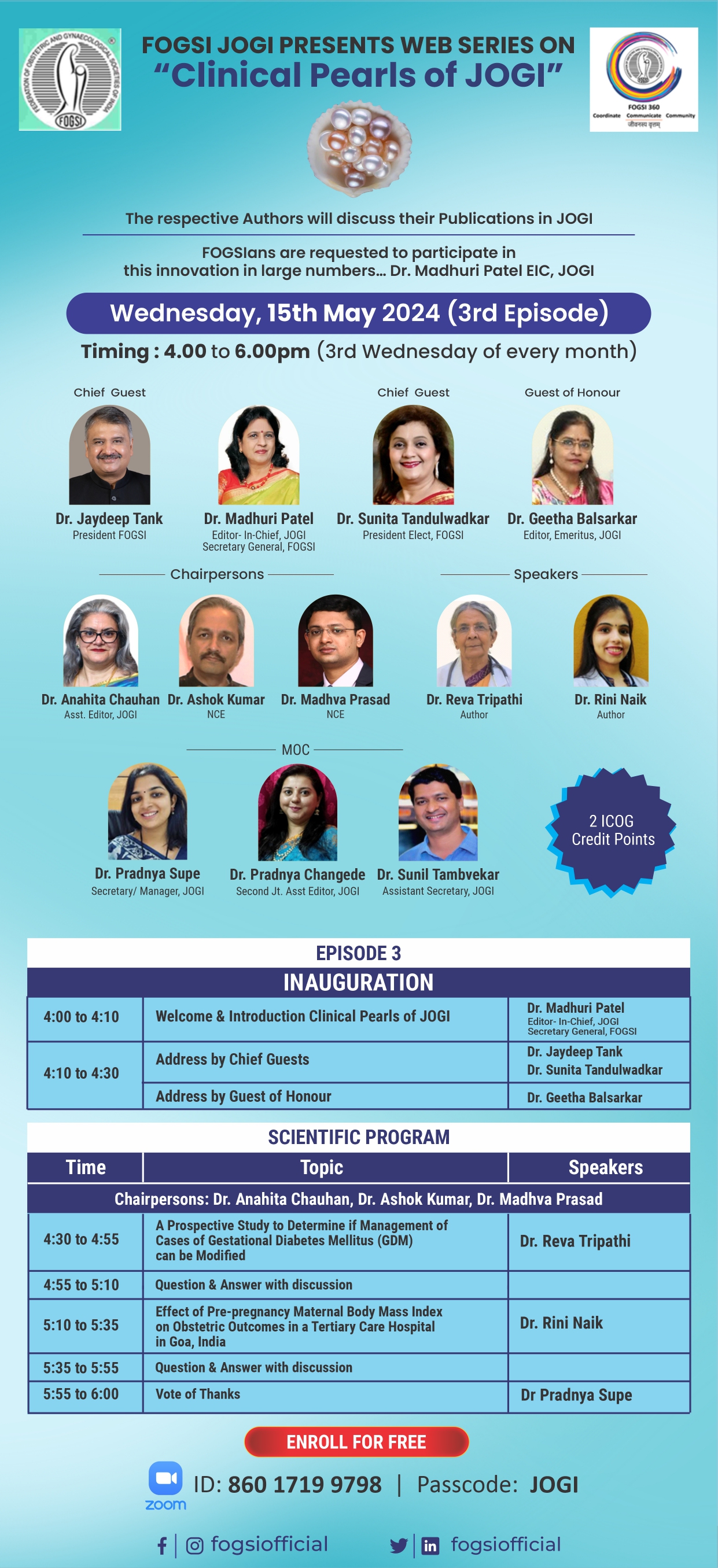
Clinical Pearls of JOGI SERIES OF WEBINARS Click her to view
VOL. 73 NUMBER 6 November-December  2023

Prediction of Maternal Morbidity and Mortality Risk Among Women with Medical Disorders Presenting to Emergency Obstetric care (EMOC): A Prospective Observational Study

Mecheril Balachandran Divya1 · Papa Dasari1

Mecheril Balachandran Divya divyambbs25@gmail.com

1 Department of Obstetrics and Gynaecology, JIPMER, Puducherry, India

  • Download Article
  • Email Article
  • Print Article
  • Whatsapp Article

Mecheril Balachandran Divya (MBBS, MS OBG, PDF Obstetric Medicine) is a Former Senior Resident; Papa Dasari (MD, DGO, FICOG, PDCR) is a Senior Professor.

Introduction Medical disorders complicating pregnancy have recently emerged as the most common cause for maternal morbidity and mortality and it is important to predict mortality risk when they present in moribund state to emergency obstetric care so as to take and timely effective measures to prevent mortality.

Methods This prospective observational study was conducted over 6 months among pregnant and post-partum women with medical disorders who sought emergency obstetric care at a tertiary care hospital. Severity of morbidity was assessed using SOFA and APACHE II scores at admission.

Results Of the 128 women, 87.5% were pregnant, and 12.5% were post-partum. Hypertensive disorders, cardiac disorders, neurological disorders and infective disorders were 24.2%, 22.6%, 14% and 9.4%, respectively. The optimal cut-off SOFA score was 2 (AUC = 0.739) with 66% sensitivity and 71% specificity and APACHE II score cut-off was 6 (AUC = 0.732) with a sensitivity of 60% and specificity of 78% in predicting severe maternal morbidity. The median scores of APACHE II and SOFA are 14 and 4, respectively, for non-survivors and for survivors it was 4 and 1.

Conclusion Hypertensive disorder was the most common medical disorder, but severity was high in cardiac disorder. SOFA and APACHE II scores are good predictors of morbidity and mortality risk.

Keywords : Medical disorders · Emergency obstetric care · APACHE II · SOFA score · Maternal mortality

Medical problems may interfere with the physiologic adaptations of pregnancy and cause poor pregnancy outcomes. In the current scenario, pregnant women with medical disorders are increasing, mainly due to demographic, lifestyle factors and most often get referred to tertiary care with complications. The later age of getting married and advanced age at conception are the main factors. Mothers and Babies: Reducing Risk through Audits and Confidential E enquiries (MBRRACE) report in 2011–2013 reported that two-thirds of maternal deaths were in women with medical comorbidities [1]. Identifying and predicting mortality risks will help in providing better care. SOFA (Sequential Organ Failure Assessment) and APACHE II (Acute Physiology And Chronic Health Evaluation II) scores are scores used in critical patients in intensive care unit to predict the acute mortality risk. APACHE II score (range from 0 to 71) was derived from 12 physiologic measurements which includes temperature, blood pressure, heart rate, respiratory rate, arterial pH, oxygenation, serum sodium, potassium and creatinine, haematocrit, white blood cell count and Glasgow coma score, in addition to chronic health status and age of the patient. SOFA score (range from 0 to 24) includes platelet, hepatic, respiratory, renal, cardiovascular and central nervous system functions. The objectives of this study were: (1.) to know the type and proportion of pregnant women with medical disorders seeking emergency care and (2.) to predict mortality risk by using SOFA (Sequential Organ Failure Assessment) and APACHE II (Acute Physiology and Chronic Health Evaluation II) scores. The purpose of predicting mortality risk in these women is to provide effective and timely multidisciplinary care and also to counsel the attendants of the women regarding the seriousness of the condition and take informed consent.

This prospective observational study was conducted from April 2021 to September 2021 after obtaining ethical clearance (JIP/IEC/2021/059). All pregnant and post-partum women (up to 6 weeks) with medical disorders who attended Emergency obstetric services at Women and Child Hospital (with dedicated obstetric ICU facility), JIPMER, Puducherry, were included in the study.

There were a total of 4781 deliveries during this study period of six months. A total of 128 patients with medical disorders who approached for emergency obstetric care in the Department of Obstetrics and Gynaecology, JIPMER, were recruited and analysed.

Table 1 represents the clinicodemographic profile of subjects. The majority of women were in the age group of 20–25 years and mean age of 26.4 ± 4.9 years. BMI was in the normal range in 57% and the mean BMI of 23.0633 ± 0.669 kg/m2. Most of the women (55.46%) were in the upper–lower socio-economic class according to modified Kuppusamy classification and the majority (82%) resided in rural areas. Referral cases constituted 76.56% and they were referred from various hospitals including medical colleges, district hospitals, private hospitals and primary health centres for further management. Pregnant women constituted 87.5% at the time of admission and the rest were post-partum women delivered elsewhere.
  1. Narayan B, Nelson-Piercy C. Medical problems in pregnancy. Clin Med. 2017;17(3):251. 
  2. Mantel GD, Buchmann E, Rees H, et al. Severe acute maternal morbidity: a pilot study of a definition for a near-miss. BJOG Int J Obstet Gynaecol. 1998;105(9):985–90. 
  3. Ferreira FL, Bota DP, Bross A, et al. Serial evaluation of the SOFA score to predict outcome in critically ill patients. JAMA. 2001;286(14):1754–8.
  4. Knaus WA, Draper EA, Wagner DP, et al. APACHE II: a severity of disease classification system. Crit Care Med. 1985;13(10):818–2
  5. Demirkiran O, Dikmen Y, Utku T, et al. Critically ill obstetric patients in the intensive care unit. Int J Obstet Anesth. 2003;12(4):266–70. 
  6. Keizer JL, Zwart JJ, Meerman RH, et al. Obstetric intensive care admissions: a 12-year review in a tertiary care centre. Europ J Obstet Gynecol Reprod Biol. 2006;128(1–2):152–6. 
  7. Vargas M, Marra A, Buonanno P, et al. Obstetric admissions in ICU in a tertiary care center: a 5-years retrospective study. Indian J Crit Care Med Peer-Rev. 2019;23(5):213. 
  8. Pattinson RC, Buchmann E, Mantel G, et al. Can enquiries into severe acute maternal morbidity act as a surrogate for maternal death enquiries? BJOG Int J Obstet Gynaecol. 2003;110(10):889–93. 
  9. Parmar NT, Parmar AG, Mazumdar VS. Incidence of maternal “near-miss” events in a tertiary care hospital of central Gujarat, India. J Obstet Gynecol India. 2016;66(1):315–20. 
  10. Kumar R, Gupta A, Suri T, et al. Determinants of maternal mortality in a critical care unit: a prospective analysis. Lung India. 2022;39(1):44–50. 
  11. Sodhi K, Bansal V, Shrivastava A, et al. Predictors of mortality in critically ill obstetric patients in a tertiary care intensive care unit: a prospective 18 months study. J Obstet Anaesth Crit Care. 2018;8(2):73.
  12. Fadiloglu E, Yuksel ND, Unal C, et al. Characteristics of obstetric admissions to intensive care unit: APACHE II, SOFA and the Glasgow coma scale. J Perinat Med. 2019;47(9):947–57. 
  13. Khergade M, Suri J, Bharti R, et al. Obstetric early warning score for prognostication of critically ill obstetric patient. Indian J Crit Care Med Peer-Rev. 2020;24(6):398. 
  14. Escobar MF, Nasner D, Hurtado CF, et al. Characterization of obstetric patients with sepsis identified by two diagnostic scales at a fourth-level clinic in Colombia. Int J Gynecol Obstet. 2018;143(1):71–6. 
  15. Oliveira-Neto AF, Parpinelli MA, Costa ML, et al. Prediction of severe maternal outcome among pregnant and puerperal women in obstetric ICU. Crit Care Med. 2019;47(2):e136-43. 
  16. Oliveira-Neto A, Parpinelli MA, Cecatti JG, et al. Sequential organ failure assessment score for evaluating organ failure and outcome of severe maternal morbidity in obstetric intensive care. Sci World J. 2012;1:2012.
  17. Roopa P, Verma S, Rai L, et al. “Nearmiss” obstetric events and maternal deaths in a tertiary care hospital: an audit. J Pregnancy. 2013;2013:393758 
  18. Norhayati MN, Hazlina NH, Sulaiman Z, et al. Severe maternal morbidity and near misses in tertiary hospitals, Kelantan, Malaysia: a cross-sectional study. BMC Public Health. 2016;16(1):1–3. 
  19. Binda J, Solanki G. Clinical and etiological study of maternal near-miss at a tertiary referral hospital of central India. Indian J Obstet Gynaecol Res. 2016;3(1):28–31. 
  20. Siddiqui SA, Soomro N, Hasnain FS. Severe obstetric morbidity and its outcome in patients presenting in a tertiary care hospital of Karachi. JPMA J Pak Med Assoc. 2012;62(3):226. 
  21. Bhadade R, de Souza R, More A, et al. Maternal outcomes in critically ill obstetrics patients: a unique challenge. Indian J Crit Care Med Peer-Reviewed Off Publ Indian Soc Crit Care Med. 2012;16(1):8.
  22. Jain S, Guleria K, Vaid NB, et al. Predictors and outcome of obstetric admissions to intensive care unit: a comparative study. Indian J Public Health. 2016;60(2):15914.
  23. Kamal S, Singh V, Singh S. A study of clinical characteristics and outcome of obstetric patients in intensive care and high dependency unit of a tertiary centre of Jharkhand, India. Int J Reprod Contracept Obstet Gynecol. 2020;9:394–9.
  • Download Aarticle
  • Email Aarticle
  • Print Article
  • Whatsapp Article