Introduction: Preterm premature rupture of membranes (PPROM) complicates 1–5 % of all pregnancies and is the major contributory factor for perinatal morbidity and mortality. Micronutrient deficiency (vitamin C) is associated with increased risk of PPROM. This study was conducted to establish the association between maternal plasma vitamin C concentration in women with PPROM and women without PPROM and to study the difference in maternal morbidity, neonatal morbidity, and mortality.
Methods: A prospective study was conducted where 40 women (20 in each study and control group) with singleton pregnancies between 28 and 37 weeks gestation were recruited. Women with anemia, diabetes, UTI, RTI, vaginal infection, bleeding, h/o PPROM in previous pregnancy, polyhydramnios, and smoker were excluded from the study. Maternal plasma vitamin C levels were measured.
Results: Ascorbic acid levels were low in women with PPROM 0.41 ± 0.08 versus 0.84 ± 0.19 mg/dl. There is a linear decline in plasma vitamin C levels as the pregnancy advances. Inverse relationship was observed between duration of rupture of membranes and vitamin C levels. There was a significant difference in maternal morbidity, neonatal morbidity, and mortality.
Conclusion: Ascorbic acid concentration was low in women with PPROM. Thus, vitamin C supplementation should be made mandatory along with iron and calcium to antenatal women to avoid the complications of PPROM.
Purpose: The purpose of this study was to determine the association between the standard pelvic organ prolapse quantification (POPQ) classification system and the simplified pelvic organ prolapse (S-POP) classification system.
Method: This is an observational study, in which 100 subjects, whose average age was 60 ± 10 years, with pelvic floor disorder symptoms underwent two systems of examinations—POPQ classification system and S-POP classification system at Safdarjung hospital—done by four gynecologists (two specialists and two resident doctors) using a prospective randomized study, blinded to each other’s findings. Data were compared using appropriate statistics.
Results: The weighted Kappa statistics for the intersystem reliability of the S-POP classification system compared with standard POPQ classification system were 0.82 for the overall stage: 0.83 and 0.86 for the anterior and posterior vaginal walls respectively; 0.81 for the apex/vaginal cuff; and 0.89 for the cervix. All these results demonstrate significant agreement between the two systems.
Conclusion: There is almost perfect intersystem agreement between the S-POP classification system and the standard POPQ classification system in respect of the overall stage as well as each point within the same system.
Pelvic organ prolapse, Pelvic organ prolapse quantification (POPQ), Simplified pelvic organ prolapse (S-POP), HymenObjective: The objective of the current study was to compare the ‘‘Hands-off’’ and ‘‘Hands-on’’ methods to reduce perineal lacerations.
Method: We conducted a randomized controlled trial to compare the effectiveness of two techniques for perineum protection during spontaneous delivery. Study participants included 600 nulliparous expectant mothers, who were divided equally between the ‘‘hands off’’ and ‘‘hands on’’ groups (n_300 per group).
Findings: A total of 147 (49 %) women in the ‘‘Handson’’ and 143 women (47.7 %) in the ‘‘Hand -off’’ groups encountered perineal trauma (p = 0.74). In the ‘‘Handson’’ group, 8 women (2.7 %) experienced a third degree trauma compared with (0.3 %) that in the ‘‘Hands-off’’ method (p = 0.1).
Episiotomy was performed on 38 women (12.7 %) from the ‘‘Hands-on’’ and 17 (5.7 %) women from the ‘‘Handsoff’’ (p = 0.003) groups. In addition, 28 women (9.3 %) from the ‘‘Hands-on’’ group and 47 women (15.7 %) from the ‘‘Hands-off’’ group experienced periurethral tears (p = 0.01) that did not need mending.
Conclusion: Application of the ‘‘Hands-off’’ method for vaginal delivery has a positive effect on the mother’s health because of the reduction of Episiotomy and third degree tearing. Therefore, we conclude that the ‘‘Hands-off’’ method offers a safer alternative for perineal control during labor.
Hands-on, Hand off, Perineal lacerationsAim: The study was done to determine the maternal and fetal outcome of pregnancies complicated by maternal diabetes either Gestational Diabetes Mellitus (GDM) or preexisting (type 1 or type 2) diabetes over a period from March 2011 to Feb 2013 in a tertiary care hospital, Varanasi.
Methods: This is a retrospective audit of the maternal and fetal outcome of women who presented to the Sir Sundar Lal Hospital, Department of Obstetrics and Gynaecology, Institute of Medical Sciences, Banaras Hindu University, Varanasi, India from March 2011 to Feb 2013, with GDM or pre-existing type 1 or type 2 Diabetes with pregnancy. The audit group comprised 65 pregnancies (67 babies), of whom 27 had preexisting diabetes and 38 cases developed gestational diabetes. Pregnant women who were found to be diabetic preconceptionally or in the first trimester were classified as ‘pre-existing diabetes’.
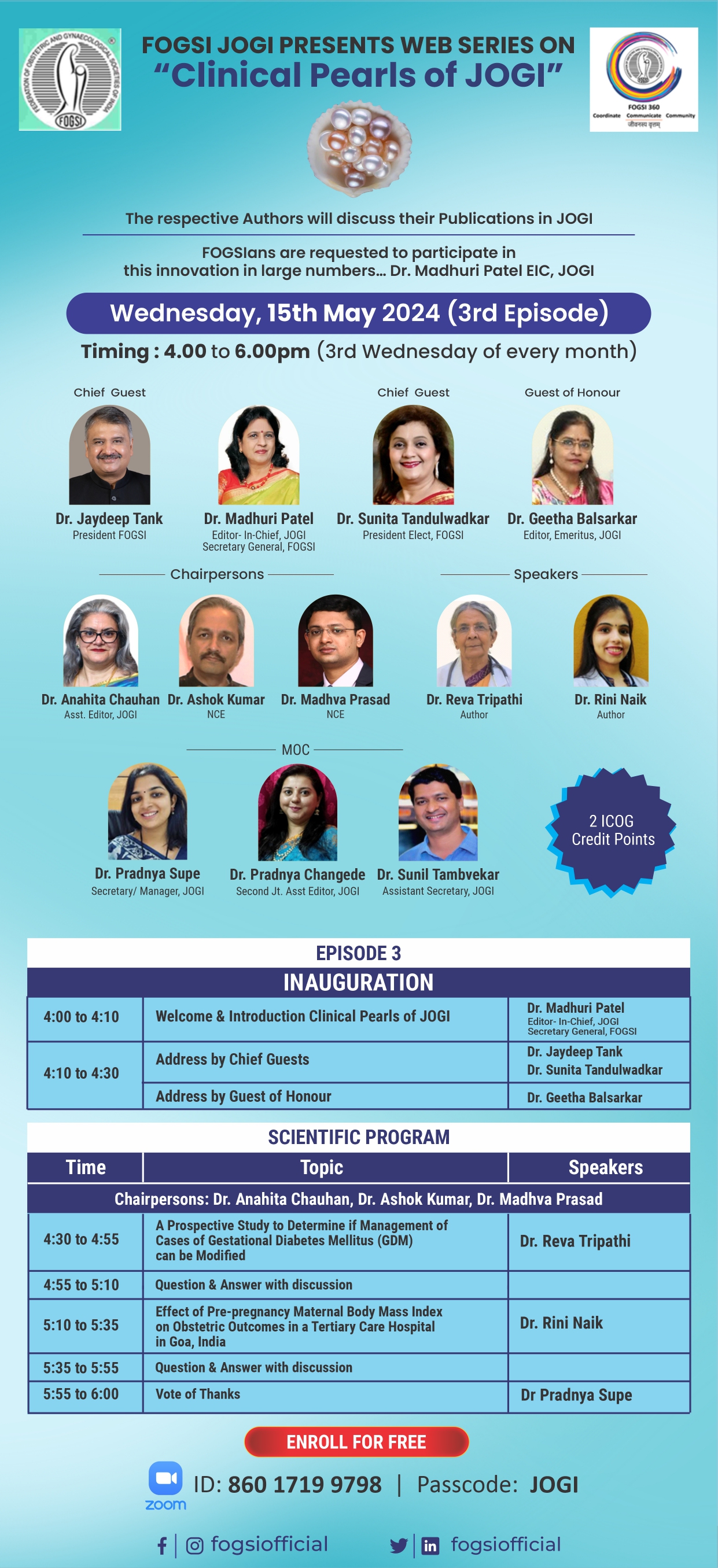
Results: There were total of 65 diabetic women in this retrospective study, 39 women were GDM (60 %) while 26 women (40 %) were having pre-existing diabetes (24 type 1 diabetes and 2 women were in type 2 diabetes group). There were 35 multigravid women (53.85 %) and 30 primigravid women (46.15 %). There were 39 (60 %) women on Insulin. There were 42 Lower Segment Caesarean Section (64.62 %) and 23 Spontaneous Vaginal Delivery (35.38 %). In fetal and neonatal complications, there were three still births, one case of intrapartum death, and one case of shoulder dystocia. Fetal anomalies were less frequent, one case of Gastroschisis with Hydrocephalus associated with Menigomyelocoele, there was one case of isolated Hydrocephalus, and there was also one case of Truncus arteriosus.
Conclusions: The study analyses maternal and fetal complication in the GDM group and also preexisting diabetes group. In our centre, the 60 % women were GDM while 40 % were having pre-existing diabetes. Total rate of fetal/neonatal complication rate was 7.69 % and of congenital anomaly rate it was 9.23 %. Proportion of still birth, Intrauterine death, and congenital malformations was higher in the pre-existing diabetes group although the data are not large enough to draw a statistically significant conclusion. LSCS rate was little higher in the GDM group (69.23 %) in comparison to the preexisting diabetes group where it was 57.69 %. SVD (Spontaneous Vaginal Delivery) rate was 30.77 % in GDM and 42.31 % in the preexisting diabetes group. HbA1c was within normal range 84.62 % of GDM group while in 15.38 % it was raised > 6 %. In the pre-existing diabetes group, only 19.23 % of women had HbA1c within acceptable range and 80.77 % had it > 6. The aim of St Vincent Declaration is to ‘achieve pregnancy outcome in the diabetic woman that is similar to that of the non-diabetic woman.’ But, so far we have not been able to achieve this. Our HbA1c level is remarkably high in the pre-existing diabetes group. Only 3 out of 65 patients’ women took Folic Acid periconceptionally. We need to work to achieve it our best. It is well known that insulin treatment during pregnancy results in reduction in the rate of macrosomia, fetal/neonatal, and maternal complications. Therefore, we need to use insulin judiciously and advocate its usage in the situations where it is needed.
Diabetes, Gestational diabetes, Maternal outcome, Fetal outcome, ComplicationsBackground: Ectopic pregnancy (EP) is the commonest cause of maternal mortality-related death in the first trimester. Methotrexate (MTX) remains the first-line treatment in optimally selected patients.
Objective: To evaluate the success rate and predictors of success of a single-dose MTX treatment in EP.
Subjects and Method: We studied retrospectively 109 patients with unruptured EP who were treated with Intramuscular MTX administered in a dose of 50 mg/m2 on days 0 and in additional doses on day 7 if b-hCG levels did not decrease by 15 % during the follow-up period. The study was conducted at the Maternity and Children Hospital Buraidah, Saudi Arabia from June 2013 to December 2013. Pretreatment b-b-hCG, EP mass diameter, peritoneal fluid, and fetal cardiac activity were evaluated. The main outcome measures were success rate, the predictors of success without surgical treatment.
Result: Under this regime, the overall success rate was 60.6 % of patients. Of the failure group, only 4.7 % of patients experienced rupture of EP. No side effects were reported. The main predictors of failure were initial b-hCG value C 3.500 mIU/mL OR 4.11 (1.646–12.248, 0.043) and EP diameter 3.73 (1.646–12.10, p = 0.003).
Conclusion: The success rate of MTX in this study was 60.6 %, and the initial b-hCG concentration and EP diameter were the best predictors of successful treatment with MTX. Furthermore, MTX should be offered only to those patients with b-hCG < 2,000 mIU/mL and EP mass size < 3.5 cm.
Ectopic pregnancy, Methotrexate, Success rate, Predictors of failure complicationsBackground: Medical method of abortion (MMA) is a safe, efficient, and affordable method of abortion. However, incomplete abortion is a known side effect.
Objective: To study incomplete abortion due to medication abortion and compare to spontaneous incomplete abortion and to study referral practices and prescriptions in cases of incomplete abortion following MMA.
Method: Prospective observational study of 100 women with first trimester incomplete abortion, divided into two groups (spontaneous or followingMMA), was administered a questionnaire which included information regarding onset of bleeding, treatment received, use of medications for abortion, its prescription, and administration. Comparison of two groups was done using Fisher exact test (SPSS 21.0 software).
Results: Thirty percent of incomplete abortions were seen following MMA; possible reasons being self-administration or prescription by unregistered practitioners, lack of examination, incorrect dosage and drugs, and lack of follow- up. Complications such as collapse, blood requirement, and fever were significantly higher in these patients compared to spontaneous abortion group.
Conclusion: The side effects of incomplete abortions following MMA can be avoided by the following standard guidelines. Self medication, over- the-counter use, and prescription by unregistered doctors should be discouraged and reported, and need of follow-up should be emphasized.
Medication abortion, Incomplete abortionObjective: To assess the predictive value of cerebroplacental ratio (i.e., S/D ratio of middle cerebral artery to S/D ratio of Umbilical artery) in detection of perinatal outcome in high-risk pregnancies.
Material and Method: This retrospective study was conducted on 150 patients between 28 and 40 weeks of gestation (25 low risk and 125 high risk) who attended OPD and indoor wards of Teerthanker Mahaveer medical college and research center, Moradabad. All patients had serial color Doppler ultrasounds done after taking informed consent which was repeated at 2 weeks interval, and data were collected with regard to perinatal outcome.
Result and Conclusion: Cerebroplacental ratio is having higher sensitivity and negative predictive value in detection of IUGR, Meconium aspiration syndrome, operative interference for fetal distress, and NICU admissions in comparison to its components. So, better prediction of neonatal outcome can be done by C/U ratio.
Cerebroplacental ratio (C/U), Doppler Ultrasound, Meconium aspiration syndrome, Middle cerebral artery (MCA), Umbilical artery (UA), Systolic flow/end diastolic flow (S/D ratio)Objective: To study the safety and efficacy of oral mifepristone in pre-induction cervical ripening and induction of labour in prolonged pregnancy.
Methods: This is a single blind randomized control trial. 100 women with prolonged pregnancy beyond 40 weeks and Bishop score <6 were recruited, and randomly allocated into two groups. Women who received Tab. Mifepristone 200 mg orally were assigned in Study Group (n = 50) and who received placebo orally were assigned in Control Group (n = 50) At the end of 24 h, change in the Bishop’s score was assessed and Tab. Misoprostol 25 lg was administered intravaginally every 4 h, maximum 6 doses for induction/augmentation of labour. Analysis regarding safety and efficacy of the drug was done with regards to maternal and perinatal outcome.
Results: Among 100 subjects, 50 received mifepristone and 50 received placebo. Mean induction to delivery interval was 1,907 ± 368.4 min for Study Group versus 2,079 ± 231.6 min for Control Group. The improvement in mean Bishop score was 5.0408 ± 1.90 for Study Group compared with 3.26 ± 1.15 was for Control Group after 24 h. Mean dose of misoprostol in Study Group was 40 ± 27.2, while the same in Control Group was 52 ± 19.46. Eight (16 %) women in Study Group and two (4 %) women in Control Group delivered vaginally within 24 h without any need of augmentation. There were 6 (12 %) cesareans and 2 (4 %) instrumental deliveries in Study Group and 8 (16 %) cesareans and 5 (10 %) instrumental deliveries in the Control Group. There was no statistically significant difference in perinatal outcomes between two groups.
Conclusions: Mifepristone had a modest effect on cervical ripening when given 24 h prior to labour induction and appearing to reduce need for misoprostol compared with placebo.
Objective: To identify risk factors for macrosomic babies.
Methods: This cross-sectional analytical study was carried out in the University Teaching Hospital and the Central Hospital of Yaounde´ (Cameroon) from October 1st, 2012 to March 31st, 2013. Women who gave birth to C4,000 or 3,000–3,499 g babies were recruited. Variables recorded were fetal sex and birth weight, gestational age, maternal age, parity, mother’s body mass index (BMI), weight gain during pregnancy, previous macrosomia, and father’s BMI. Fisher exact test and student t-test were used for comparison. Level of significance was P\0.05.
Results: Main risk factors for macrosomia are delivery of a previous macrosomic baby (OR 13.1), maternal weight gain C16 kg (OR 10.2), parity C3 (OR 4.8), father’s BMI C30 (OR 3.7), male sex (OR 2.2), and post-term (OR 1.9).
Conclusions: Father’s obesity should be added among the known risk factors for macrosomia.
Objective: To study the incidence of elective cesarean deliveries at term and to correlate their neonatal outcomes at different gestational ages (370/7–406/7).
Methods: Outcomes including the rate of NICU admissions, usage of ventilator/CPAP, and other morbidities were analysed and compared with the gestational age during the study period from January 2012 to April 2013.
Results: The incidences of elective deliveries at 37, 38, 39, and 40 weeks of gestation were 10.6, 29.7, 28, and 31.5 %, respectively. NICU admissions-RR 3.94 (95 % CI 1.92–8.09), respiratory distress-RR 5.255 (95 % CI 1.9–14.4), ventilatory usage, and hospitalization stay (P value < 0.05) were higher in neonates born at 370/7-6/7 versus 390/7–6/7 weeks (least morbidity group).
Conclusion: Despite recommendations, more than onethird of term babies are delivered electively at < 39 weeks. The fivefold augmented respiratory morbidity and fourfold increased NICU admissions in early term neonates, and the least morbidity in neonates delivered at 39 weeks emphasize the importance of restricting the non-emergent/elective deliveries to 39 weeks of gestation.
Early term, Elective deliveries, LSCS, Morbidities , NeonateBackground/Purpose of the Study In India oral iron tablets for anaemia have been distributed through the health system since many years, but there has been no significant change in the burden of anaemia. The objective of the present study was to capture the existing practices on the use of intravenous iron sucrose (an alternative treatment for anaemia) in the public health system in two states of India (Tamil Nadu and Uttar Pradesh).
Methods; An observational study in the form of a registry was maintained for 3 months at purposively chosen public health facilities in the above-mentioned states of India. Anaemic pregnant women (n = 764) who were given intravenous iron sucrose during the antenatal or post-partum period were included in the registry. Information was collected on severity of anaemia at which intravenous iron sucrose therapy was initiated, the dose and schedule given and any adverse events noted during and immediate postinfusion period.
Results: 99 % of the infusions were given as slow infusion over a mean duration of 30 min, diluted with 0.9 % sodium chloride. The mean haemoglobin level at the time of start of intravenous therapy was 8.3 gm/dl. In Uttar Pradesh, 46 % of women received only one dose of iron sucrose in contrast with 15 % in Tamil Nadu.
Conclusions: Although intravenous iron sucrose is commonly used in pregnant anaemic women, standard protocols and guidelines for its usage are lacking. These need to be formulated before scaling it up across public health facilities in India.
Background: The purpose of this study was to assess the efficacy and outcomes of preoperative prophylactic metoclopramide and dimenhydrinate use in elective cesarean births.
Methods: Participants (n = 84) scheduled for elective cesarean births were randomized equally into placebo (10 cc 0.9 % NaCl), 10-mg metoclopramide or 50-mg dimenhydrinate groups. Oral alimentation was prohibited 8 h before the surgery; however, patients continued drinking water until 4 h before surgery. Placebo and antiemetics were administered 1 h before the anticipated procedure in a 5-ml syringe. In metoclopramide and dimenhydrinate group, an ampoule of the agents was completed to 5 ml by adding 0.9 % NaCl. In the control group 5 ml of 0.9 % NaCl was used. All prophylactic agents were administered intramuscularly. All patients received a general anesthesia. The placebo group (control group) was compared with the metoclopramide and dimenhydrinate groups.
Results: Demographic data including maternal age, height, weight, body mass index, gravidity, parity, miscarriage, induced abortion, the number of offspring, and the medical history did not show significant differences among the three groups. Postoperative nausea, vomiting, and the use of rescue medication ratios were significantly lower in metoclopramide and dimenhydrinate groups compared with the placebo group (p\0.05); however, the difference between the metoclopramide and dimenhydrinate groups was not significant (p > 0.05).
Conclusion: Dimenhydrinate and metoclopramide significantly decrease postoperative nausea, vomiting, and the need for rescue antiemetic medication. Both agents have similar efficacy and may be used as an alternative to each other.
Anesthesia, Cesarean section, Dimenhydrinate, Metoclopramide, Postoperative nausea and vomiting, Surgical procedures, ElectiveObjective: The objective of this study was to evaluate severe maternal outcomes (including maternal deaths and maternal near-miss cases).
Materials & Methods: A prospective study of severe maternal outcomes (including maternal deaths and maternal near-miss cases) from May 2012 to April 2013 was performed. For each woman, data were collected on the occurrence of selected severe pregnancy-related complications, the use of critical interventions, and admissions to intensive care unit
Results: The total number of deliveries were 2340. The number of maternal deaths was three. The natures of the near-miss cases during the study period were recorded. Prevalence of SAMM (severe acute maternal morbidity) was 2.025 %.
Conclusion: In areas where the maternal mortality is low,
there is a need to shift focus to maternal near-miss cases or
SAMM, which is a useful adjunct to maternal death enquiries
Introduction: In carcinoma of cervix, if overall treatment time (OTT) is prolonged beyond 6 weeks, then the total dose required to achieve a given probability of tumor control is to be increased by 0.6 Gy for each day of prolongation, to control the accelerative repopulation of the cells, i.e., 1 % loss of tumor control, and to avoid increased treatment delays and drop outs due to the prolonged gap between EBRT and intracavitary brachytherapy (ICBT).
Objectives: To evaluate local disease control and early complications of concomitant HDR-ICBT with EBRT and thereby decrease the OTT in I B–III B stage carcinoma cervix.
Methods: Fifty patients of carcinoma cervix (FIGO-I B/III B) were randomly divided into two groups: the study group treated with concomitant EBRT and HDR-ICBT (EBRT = 50–50.4 Gy/25–28 Fr, HDR 7 Gy in 3 Fr during the 3rd, 4th, and 5th weeks), EBRT and weekly cisplatin were not given on the day of HDR-ICBT; and the control group treated with EBRT followed by HDR-ICBT and weekly cisplatin. Acute reactions and local disease response were compared after treatment and at 6-month follow-up.
Results: Medians of OTTs were 42 and 63 days in the study and the control groups, respectively. Dysuria and diarrhoea incidences were more in the study but manageable. At the completion of the treatment, there were 92 and 80 % complete responses; 4 and 4 % partial responses; and 4 and 16 % stable diseases in the study group and the control group, respectively. DFSs (disease free survivals) at 6-month follow-up were, respectively, 96 and 84 %, and most of the stable diseases were observed in stage III B.
Conclusions: Response was better in the study group but statistically insignificant, acute reactions were manageable, and there was decrease in drop outs due to completion of treatment at a stretch, but larger number of patients and longer follow-up are required to arrive at concrete conclusions.
Cervical cancer, Concurrent EBRT and HDR, Decreasing OTT, Local response, Early reactions, Preventing drop outsStudy Objective: To evaluate the association between outcomes of laparoscopic hysterectomy with respect to clinical factors, intraoperative variants, and post-operative complications.
Design: The study conducted was retrospective (Canadian Task Force Classification II-1). Setting The set used in this study was a gynecological laparoscopic centre.
Patients: The present study included 858 women who underwent laparoscopic hysterectomies with or without bilateral/unilateral salpingo-oophorectomy, from December 2004 to May 2014.
Interventions: Eight hundred and sixteen patients underwent total laparoscopic hysterectomy, 14 patients underwent subtotal laparoscopic hysterectomy, 20 patients underwent laparoscopic-assisted vaginal hysterectomy, and 8 patients underwent laparoscopic radical hysterectomy with bilateral pelvic lymph node dissection.
Measurements and Main Results: All surgeries were performed by the same surgeon, using the same surgical technique. The medical records were reviewed, and data were collected with respect to age, indications, type of surgery performed, intraoperative variants, and post-operative complications. Patient average age was 44.9 ± 6.2 years. Most common indication for benign TLH was leiomyoma of 54.4 %. Indications for laparoscopic radical hysterectomy were early stage endometrial cancer (n = 5) and early stage cervical cancer (n = 3). The maximum uterine size operated on was from 20–26 weeks, 4.9 % (n = 42). 9.7 % had previous abdominopelvic surgery. Fifty three % underwent unilateral/bilateral salpingo-oophorectomy. Conversion rate was 0.93 % (n = 8). The minimum and maximum operating time during the total study period was 20 min–2 h. The major complication rates were 0.9 % (n = 8). The hospital stay was not more than 2 days.
Conclusion: In our experience of 858 laparoscopic hysterectomies, 850 were done for benign indications, and 8 done for malignancies. TLH can be performed more safely and under vision, with less blood loss, early post-operative recovery, less post-operative infection, and less complication rate.
Total laparoscopic hysterectomy, Indications, Complications, Conversion rateBackground: Uterine AV malformation is a rare cause of torrential post-abortal hemorrhage, which can present with varying grades of severity. Diagnosis requires a high degree of suspicion and is done with ultrasound and Doppler.
Case Series: In our institution, during the period 2008–2013, five cases of symptomatic uterine AVMs have been reported. All of them were in the reproductive age group (22–36 years), presenting with a history of miscarriage or termination of pregnancy for which curettage was done. The presentation was with recurrent bouts of torrential bleeding, some triggered by second curettage, and not controllable with regular measures. Diagnosis was by ultrasound- gray scale, color Doppler, and spectral Doppler. The time interval between the onset of symptoms and the primary curettage was 8–89 days; four patients underwent selective arterial embolization, and one patient opted for hysterectomy. On follow-up, all the four patients are presently free of symptoms; two of them conceived within 2 years of the procedure and carried the pregnancy to term—one resulting in a live-birth and the other intrauterine death.
Conclusion: Uterine AV malformation should be thought of as a differential diagnosis in all cases presenting with bleeding after miscarriage or curettage, since diagnosis is simple and treatment by selective arterial embolization saves morbidity of surgery and anesthesia, and more importantly reduces hospital stay and the absence from work.
Arteriovenous malformation, Uterine artery embolization, Vascular malformations, GelfoamBackground: Induction of labor has become one of the most common interventions in obstetrics. Induction is indicated when the benefits to either mother or fetus outweigh those of continuing the pregnancy. Maternal complication rates that are increased in association with labor induction include cesarean delivery, chorioamnionitis, abruptio placentae, and uterine atony. So identifying those pregnancies that can be induced with low risk of cesarean delivery is important. The aim of this study was to identify those factors which influence the risk of emergency cesarean delivery in induced labors at term.
Methods: It is a case–control study conducted at Tertiary care center and affiliated hospitals. In this study, odds ratio with 95 % confidence interval is taken as a measure of relative risk. Patients were evaluated for risk factors for cesarean section using logistic regression. Cases include all women who were induced at term and delivered by emergency cesarean section. Controls include all women who were induced at term and delivered vaginally.
Results: The risk factors for cesarean delivery are advanced maternal age at delivery (C35 years), high early pregnancy body mass index (C30 kg/m2), nulliparity, low preinduction Bishops score (\5), gestational diabetes mellitus, and intrauterine growth restriction.
Conclusions: Women with multiple risk factors for cesarean can be taken up for elective cesarean section rather than inducing them at term.
Objective: In this study, we evaluate the safety and feasibility of cesarean myomectomy and compare this procedure with abdominal myomectomy in single fibroid, in terms of blood loss and postoperative complications.
Methods: Thirty-three patients who underwent cesarean myomectomy from June 2006 to 2012 in Amrita Institute of Medical Sciences, were included in the study. Almost an equal number of patients who underwent abdominal myomectomy (32) in the same period were included. Women are divided into two groups: group 1—cesarean myomectomy, group 2—abdominal myomectomy.
Results: Mean age of the women was comparable; mean gestational age in group 1 was 37.97 ?/- 1.57 weeks; and 60 % were primiparous. Hemoglobin (Hb) drop postoperatively was compared between the groups, and there was no significant difference. Though there was statistically significant difference among the groups regarding the size of fibroids, the main outcome measure of the study, the Hb drop was comparable between group 1 and 2. There is statistically significant difference in the Hb difference with increasing mean diameter of the fibroids. As the size increases, Hb drop also increases indicating the increasing blood loss. The measures used to reduce blood loss such as vasopressin instillation and stepwise devascularization influence the blood loss, and P value shows borderline significance. There was no difference in Hb drop among the groups according to the type of fibroids.Butmore subserousfibroidswere removed in group 1, whereas more intramural fibroids were removed in group 2.
Conclusion: Cesarean myomectomy can be safely done in single fibroids and is comparable to abdominal myomectomy in terms of blood loss.
Cesarean myomectomy, Abdominal myomectomy, Blood loss, Mean diameter of fibroidBackground: Postpartum hemorrhage (PPH) is the leading cause of maternal mortality worldwide. Many methods have been developed to decrease its rate. The aim of this study was to evaluate the applicability of a new nonpharmacologic maneuver in decreasing its rate.
Methods: This case series study was conducted in one center in Cairo, Egypt, from January-2010 to June-2013. 400 pregnant women, aged 18 years or more and candidate for normal labor, were enrolled to this study. High risk subjects for PPH were excluded. After placental delivery, the new maneuver was done by sustained traction of the anterior and posterior lips of the cervix by two ovum forceps for duration of 90 s. The amount of blood loss was estimated by standardized visual estimation after removal of the forceps. All subjects were followed up for 6 h.
Results: The rate of PPH, defined as more than 500 ml, was eight cases (2 %) with 95 % CI (0.63–3.37 %). The rate of PPH was not affected by parity, gestational age, episiotomy, or the presence of tears. PPH is more in cases with anemia (p 0.032). It occurred in all cases with uterine atony (p\0.001). The range of estimated blood loss was 550–600 ml in cases with PPH and 150–450 ml in cases without PPH. Severe PPH more than 1,000 ml did not occur.
Conclusion: This pilot study introduced a novel maneuver that can be helpful in decreasing the rate of PPH and reducing the amount of postpartum blood loss. Further RCT is recommended to investigate it.
Objective: To identify an effective misoprostol-only regimen for termination of pregnancy between 12 and 20 weeks of gestation, a prospective randomized study comparing sublingual, vaginal, and oral routes of administration of misoprostol was done.
Methods: One hundred and fifty women (12–20 weeks gestation) were randomly divided into three groups and given 400 mcg misoprostol sublingually, vaginally, and orally every 4 h up to a maximum of four doses. Primary outcome was the success rate at 24 h. Secondary outcomes were failure rate, induction–abortion interval, and need for surgical intervention. Various side effects and patients’ subjective assessment of comfort with the route of administration were also studied.
Results: Success rate at 24 h of sublingual (86 %) group was higher compared to oral (64 %) group (P = 0.011). Complete abortion rate of sublingual (76 %) group was higher than that of oral (48 %) group (P = 0.004). There was no significant difference in the failure rate and need for surgical intervention in the three groups. Induction–abortion interval in sublingual (9.8 ± 3.6 h) and vaginal (10.6 ± 2.9 h) groups was shorter than that in oral group (14.3 ± 3.3). Diarrhea occurred significantly more in the oral group (28 %) and sublingual (22 %) compared to vaginal group (6 %). Fever was significantly higher in vaginal (36 %) than that in the oral group (12 %). Oral route of administration was most comfortable.
Conclusions: Sublingual route results in significantly higher abortion rate compared to oral route. Vaginal route has efficacy similar to sublingual route.
Misoprostol, Abortion, Sublingual, Vaginal, Oral