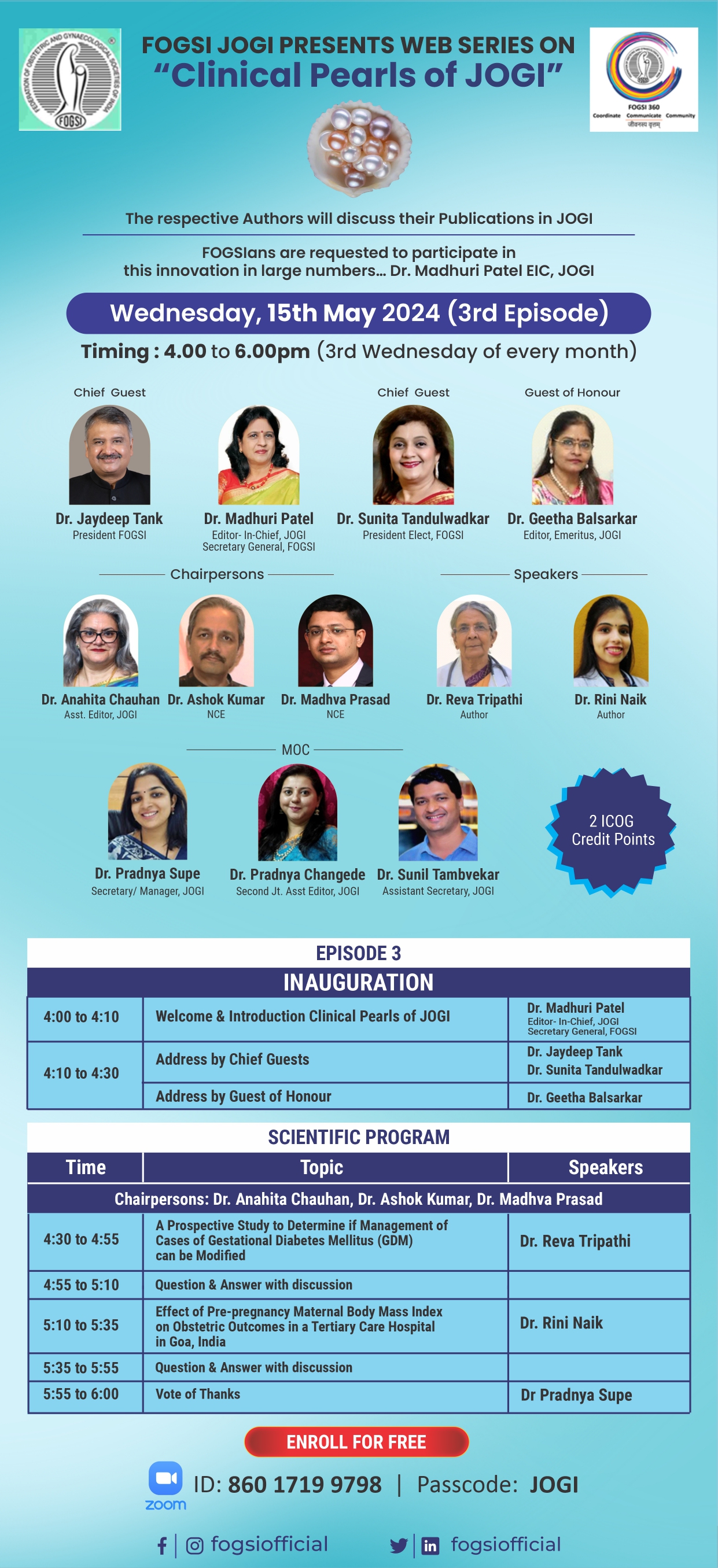
Aim and Objective
To determine the efficacy of antenatal corticosteroids given in the late preterm period.
Methodology
We conducted a retrospective case–control study on patients with singleton pregnancies who were at a risk of delivering in the late preterm period (34 weeks to 36 weeks 6 days). A total of 126 patients who had received antenatal corticosteroids (prenatal administration of either betamethasone or dexamethasone, minimum one dose) during the late preterm period were taken as cases, and 135 patients who had not received steroids antenatally due to various reasons, for example, who were clinically unstable, presented with active bleeding, non-reassuring foetal status that obligated an imminent delivery and those in active labour were included as controls. The various neonatal outcomes like APGAR score at one and five minutes, incidence of admission and duration of stay in neonatal intensive care unit (NICU), respiratory morbidity, requirement of assisted ventilation, intraventricular haemorrhage (IVH) necrotizing enterocolitis, transient tachypnea of the newborn, respiratory distress syndrome, use of surfactant, neonatal hypoglycaemia, hyperbilirubinemia requiring phototherapy, sepsis and neonatal mortality were compared between the two groups.
Results
The baseline characteristics of both groups were comparable. There was a lower incidence of admissions to neonatal intensive care unit (NICU) (15% vs. 26%, p = 0.05), respiratory distress syndrome (5% vs. 13%, p = 0.04), requirement of invasive ventilation (0% vs. 4%, p = 0.04) and hyperbilirubinemia requiring phototherapy (24% vs. 39%, p = 0.02) in the babies of the group that received steroids compared to the control group. The rate of overall respiratory morbidity in the neonates was lowered after giving steroids (16% vs. 28%, p = 0.04). The incidence of neonatal necrotizing enterocolitis, hypoglycaemia, IVH, TTN, sepsis and mortality between the two groups was not significant (p > 0.05).
Conclusion
Antenatal corticosteroids administered to patients between 34 and 36 weeks 6 days of gestation reduce respiratory morbidity, requirement of invasive ventilation, respiratory distress syndrome, hyperbilirubinemia requiring phototherapy and the incidence of NICU admissions in the newborns.
Background
Due to the significant role of male in decision making in India, they may decide if, when and where a woman may access antenatal, delivery and postnatal care; and whether or not to provide financial resources to travel to these services. Men's involvement in maternity care is recognized as a key strategy in improving maternal health and accelerating the reduction of maternal mortality. This study explores key components and challenges to male involvement in maternal health care (MHC).
Methods
Focus group discussions (FGDs) were conducted with a purposive sample of the community key stakeholders from the field practice area of All India Institute of Medical Sciences, (AIIMS) Rishikesh from October 2020 to January 2021. Manual thematic analysis with a semantic approach was used for the data analysis. Themes were prioritized using Participatory rural appraisal (PRA) technique.
Results
Twenty-three participants represented the heterogeneous group of key stakeholders. Stakeholders identified the need for improved awareness regarding MHC services among men. Husband involvement is affected by availability (work stations at different places), literacy, gender-based work domain and social cultures, finances and health facility environment.
Four major themes were identified: Male involvement in antenatal, intranatal; postnatal care; and barriers to male involvement in MHC. Sub-themes under male involvement in antenatal care; intranatal care; and postnatal care were further prioritized via PRA as ‘very important’; ‘important’ and ‘not so important’ and scores were given as 3, 2 and 1 respectively.
Conclusions
Male involvement is a key strategy to improve pregnancy outcome; however, different challenges exist in their involvement in the maternal health care. Current study helped to contextualize the perception regarding importance of male involvement in MHC; and the situation of study area in order to understand social and cultural factors that shape the behavior and practices of men in relation to their involvement.
COVID 19 pandemic is one of the biggest challenge to health system of developing as well as developed countries. Because of the novelty of the virus, limited data were available regarding perinatal outcome. The objective of this study is to find out the perinatal outcome in COVID-19 infected mothers who delivered during COVID Pandemic.
Methodology
A cross sectional study was carried out at PCMC’S Post-Graduate Institute and YCM Hospital Pune (Maharashtra) from 1 May 2020 to 31 October 2021 which was a dedicated COVID hospital during COVID pandemic. A total of 362 maternity patients (including 5 twin pregnancies) having COVID 19 infection who gave birth to 367 Newborns were studied. Maternal COVID -19 infection was diagnosed either by RTPCR test or Rapid Antigen test. Demographic variables, maternal symptoms, labour and neonatal outcome were recorded. RT PCR of neonates at birth was performed. Data was analyzed statistically by using Epi Info Software.
Aim
To analyze the perinatal outcome among COVID-19 infected mothers who delivered during Covid pandemic.
Objectives
Study was conducted with the primary objective to analyze the labour outcome, maternal symptoms and secondarily to study maternal demographic profile and to compare disease severity during 1st and 2nd wave of COVID and to detect possibility of vertical transmission of COVID-19 in neonates of covid positive mothers.
Results
74.2% patients from young reproductive age (21–30 years age) were affected. All socioeconomic classes were affected. 61% patients were multigravida. Normal BMI was noted in 49.8%. 28.2% deliveries were preterm. Caesarean section rate was 50.5%. Following obstetric high risk factors were noted—anaemia in 34.2% followed by previous LSCS in 26.2% cases and preeclampsia in 18.7% Overall 54.6% patients were asymptomatic while 45.4% were symptomatic. Symptomatology between 1st and 2nd wave showed statistical significance (p value < .05%) for mild, moderate and severe symptoms. Myalgia, cough, fever and fatigue were common presenting symptoms. 14% patients required ICU/HDU care. HDU/ICU requirement showed statistical significance (p value < .05) between 1st and 2nd wave. Overall maternal mortality was 1.1% (4 maternal deaths in 2nd wave) with no mortality in 1st wave. 96.4% were live births. Birth weight was more than 2.5 kg in 62% cases and 21.3% cases required NICU. Vertical transmission of COVID was seen in 1.1% cases.
Conclusion
Pregnant patients with moderate and severe disease are at higher risk of perinatal complications. ICU/HDU management with multidisciplinary management may reduce morbidity and mortality. Neonatal affection due to COVID may not be severe but may increase prematurity due to iatrogenic intervention.
Background
Many resource-constrained centres fail to meet the international standard of 30 min of decision-to-delivery interval (DDI) of Category-1 crash caesarean deliveries. However, specific scenarios like acute foetal bradycardia and antepartum haemorrhage necessitate even faster interventions.
Methods
A multidisciplinary team developed a “CODE-10 Crash Caesarean” rapid response protocol to limit DDI to 15 min. A multidisciplinary committee analysed a retrospective clinical audit of maternal–foetal outcomes over 15 months (August 2020–November 2021), and expert recommendations were sought.
Results
The median DDI of twenty-five patients who underwent a “CODE-10 Crash Caesarean delivery” was 13 ± 6 min, with 92% (23/25) of DDIs falling below 15 min. Seven neonates required intensive care for more than 24 h with no maternal or neonatal mortality. DDIs during office and non-office hours were not significantly different (12.5 ± 6 min vs 13 ± 5 min, p = 0.911). Transport delays caused the two instances of DDI > 15 min.
Conclusion
The novel "CODE-10 Crash Caesarean" protocol may be feasible for adoption in a similar tertiary-care setting with appropriate planning and training.
Introduction
Practice of starting and sustaining breastfeeding is affected by many conditions, mode of delivery is one of the major factor influencing it. Purpose of the study was to see if the mode of delivery affects the subsequent lactation in early postpartum period and to raise awareness among the community about the importance of mode of delivery in early initiation of breast feeding.
Materials and Methods
Present study was a hospital based observational, comparative prospective study. A sample size of 120 subjects in each group (caesarean delivery CD Group and vaginal delivery VD group) was required. Serum prolactin and LATCH score both at 1st hour and 24th hour were compared in both groups.
Results
Mean LATCH score at 1st hour and 24th hour of CD Group was 5.44 ± 0.68 and 7.12 ± 0.95, respectively. The mean LATCH score at 1st hour and 24th hour of VD Group was 7.12 ± 0.94 and 8.1 ± 1, respectively. Mean serum prolactin level at 1st hour and 24th hour of CD Group was 259.68 ± 33.99 and 309.99 ± 42.27, respectively. Mean serum prolactin level at 1st hour and 24th hour of VD Group was 304.91 ± 42.07 and 333.34 ± 42.65, respectively. The mothers delivered by caesarean had main problem with latch (L) and hold (H) of the baby as compared to mothers delivered vaginally.
Conclusion
Mode of delivery has a direct impact on early initiation of breast feeding. Caesarean delivery is a cause for delay in initiation of breastfeeding.
Introduction
The study aimed to evaluate COVID-19 associated psychological distress among pregnant and postpartum women during the second wave of COVID-19 in India.
Methods
A cross-sectional survey was done using a pre-validated tool involving 491 participants attending a tertiary-care hospital during the second wave of COVID-19 in India.
Results
Three-fourths of participants experienced negative emotions such as fear and various features of depression. Participants (75%) reported COVID-related news on TV/Radio/Newspapers including social media as the major trigger for these negative emotions. Loss of social support mainly affected postpartum women (p < 0.001) and working women (p < 0.001). Inability to access healthcare services had negative associations with age (p < 0.001), education (p < 0.001), and socioeconomic class (p < 0.001). Various coping strategies being followed by participants included watching TV/Videos or reading books (93%), resorting to social media (77%), spending more time praying and meditating (86%), and engaging in hobbies (56%).
Conclusion
During the second wave, the COVID-19 pandemic had a significantly high negative impact on the psychological and social well-being of pregnant and postpartum women. Hence, it is important to initiate appropriate preventive and corrective steps by the policymakers for any future waves of the pandemic.
Background
Levonorgestrel Intra Uterine System insertion for contraception is preferred in the follicular phase. However, the ideal time of insertion for Abnormal Uterine Bleeding is not stated clearly. The aim of our study is to find out the effect of timing of insertion on expulsion and irregular bleeding pattern post insertion.
Methods
A follow-up study of patients with LNG-IUS for AUB was conducted. They were grouped into four based on the day of insertion from Last Menstrual Period (LMP). The pattern of irregular bleeding post insertion was compared with odds ratio and the expulsion rate was compared with log rank test.
Results
The most common indication for the 76 patients was ovulatory dysfunction (39.4%) followed by Adenomyosis (36.84%). Those who had LNG-IUS insertion from day 22–30 had quicker expulsions of 25% of patients by 3 months. By 6 months and later expulsion rate was much higher in the luteal phase than the follicular phase (p < 0.03). The least risk of moderate or heavy bleeding was for the 8–15 day group when compared to the 22–30 day group, the odds ratio being 0.03 [95% CI: (0.01–0.2)].
Conclusion
Based on expulsion rate alone, insertion of LNG-IUS at any time in the follicular phase is ideal. Considering both expulsion rate and pattern of bleeding the ideal time would be late follicular phase, that is 8–15th day.
Background
COVID-19 pandemic led to an alarming rise in sickness absenteeism among the radiologists. Anticipating a continued shortage of experienced radiologists in future COVID waves, it is essential to train the medical professionals in basic skills related to ultrasonography to enable them to perform basic Obstetrics and Gynecology (OG) scans safely in emergencies. Virtual reality simulation training is an alternative to conventional ultrasound training.
Methods
A cross-sectional study was conducted during 8-day-long workshop to identify the trainees’ basic, after training knowledge and skills in OG ultrasound and to document their perceptions of the training. Statistical analysis was done using descriptive statistics (percentages and mean standard deviations) and paired t test for comparisons.
Results
A total of 80 health care professionals underwent ultrasound simulation training. It was found that the post-test score in the knowledge domain, instrument handling, basic gynecological skills, and first-trimester antenatal ultrasound skills in the practical domain was significantly higher than the pre-test score (P-value < 0.0001). Out of 80 participants, 45 (56.25%) agreed that ultrasound simulation is an ideal method of teaching and training basic OG skills to the novice. Sixty-six out of 80 (82.5%) felt that the principles of handling a human mannequin are the same as those of real patients. Forty-eight participants out of 80 (60.0%) felt that ultrasound simulation can be used as an ideal tool for self-assessment of health care professionals.
Conclusion
The study showed that ultrasound-based simulation can provide a realistic setting for training and assessment of novices in learning basic skills.
Background
Polycystic ovary syndrome (PCOS) is one of the most common endocrine disorder having most impact on women of reproductive age group, affecting their quality of life (HRQOL) and psychological well-being.
Objective
This paper aims to determine QOL among women affected with PCOS attending a multidisciplinary clinic using PCOSQ tool and its association with socio-economic status, phenotypes, anxiety, depression and metabolic comorbidities and evaluate the coping strategies adapted by these women.
Design
Retrospective study.
Setting
Integrated multidisciplinary PCOS clinic.
Patient(s)
Two hundred and nine women diagnosed with PCOS as per Rotterdam criteria.
Results
Infertility was an important condition for reduced HRQOL and psychological morbidity across all socio-economic status and phenotypes. The poor psychological status and obesity were identified as determinants of HRQOL among women affected with PCOS. Those who suffered from anxiety, depression and showed lower HRQOL used emotional maladaptive coping strategies.
Conclusion
Results reveal that HRQOL of PCOS women is worsened in the presence of comorbidities. Maladaptive and disengagement coping strategies used by women may worsen their psychological status. Holistic assessment of comorbidities and its management can help improve HROL of affected women. Personalised counselling based on the assessment of coping strategies used by women could empower women to cope better with PCOS.
Introduction Gestational diabetes is defined as the carbohydrate intolerance of variable severity with onset or first recognition during pregnancy. Gestational glucose intolerance (GGI) is used to indicate pregnant women whose 2-h postprandial glucose is > 120 mg/dl and below 140 mg/dl (Diabetes in Pregnancy Study Group of India, DIPSI criteria). Aim This study was planned to see whether intervention in GGI group helps to improve feto-maternal outcomes.
Methodology This open-label randomized control trial was conducted in Department of Obstetrics and Gynaecology of King George's Medical University, Lucknow. Inclusion criteria were all the antenatal women attending the antenatal clinic and diagnosed as GGI, and exclusion criteria were overt diabetes.
Results Total of 1866 antenatal women were screened, and among them, 220 (11.8%) women were diagnosed as gestational diabetes; 412 (22.1%) women were diagnosed as GGI. The mean fasting blood sugars in the women with GGI who had medical nutrition therapy were much lower than the women with GGI who did not have any intervention. The present study showed the women with GGI had higher complications like polyhydramnios, PPROM, foetal growth restriction, macrosomia, preeclampsia, preterm labour and vaginal candidiasis more in the women with GGI as compared to euglycaemic women.
Conclusion The present study of nutritional intervention in GGI group has shown trend towards lesser complication if we start medical nutrition therapy reflected by delayed development of GDM and less neonatal hypoglycaemia and hyperbilirubinemia.
GDM · GGI · Diabetes · Blood sugar · DIPSI · Medical nutrition therapyBackground The effectiveness and safety of pituitrin injection coupled with hysteroscopy and suction curettage as treatment for type I cesarean scar pregnancy (CSP) have not been studied enough in the literature, by comparing it to uterine artery embolization (UAE) followed by suction curettage we aim to determine its efficacy.
Materials and Methods Data of 53 patients (the PIT group) with type I CSP treated with pituitrin injection combined with hysteroscopic suction curettage and 137 patients (the UAE group) with type I CSP treated with UAE followed by suction curettage were collected in retrospect. The clinical data were analyzed statistically to compare the efficacy and safety between the two groups.
Results The PIT group had a shorter duration of postoperative vaginal bleeding, postoperative hospitalization, and overall hospitalization length (P < 0.05). The PIT group had lower overall hospitalization costs and a lower rate of adverse events than the UAE group (P < 0.05). There was no significant difference between the two groups in terms of treatment success rate, the average length of operation, blood loss during the procedure, time when serum β-hCG returned to normal range, and menstrual recovery time after hospital release (P > 0.05).
Conclusion UAE and pituitrin injection followed by hysteroscopic suction curettage are good choices for type I CSP treatment. However, pituitrin injection with hysteroscopic suction curettage outperforms UAE followed by suction curettage. Thus, pituitrin injection may be an option of high priority for type I CSP.
Cesarean scar pregnancy · Hysteroscopy · Pituitrin · Suction curettage · Uterine artery embolizationBackground Tibolone is an alternative to conventional estrogen and progesterone in relieving post-menopausal symptoms in Indian women.
Material and Methods A prospective short-term observational study was done at a tertiary care teaching hospital in New Delhi from November 2019 to September 2021. Fifty-three women, less than 60 years of age, presenting with moderate to severe intensity of menopausal symptoms as assessed by measuring menopausal rating score (MRS > 8) were enrolled and given Tibolone 2.5 mg daily for 3 months. Improvements in symptoms were seen at 1 month and 3 months. Side effects were also noted.
Results Marked improvement was seen as reduction in scores of psychological, somatic and genitourinary symptoms was noted. The psychological symptoms reduced from 8.92 ± 1.959 to 2.905 ± 1.042, the somatic symptoms decreased from 8.33 ± 2.299 to 3.4 ± 1.167, and genitourinary symptoms decreased from 3.64 ± 1.42 to 2.150 ± 0.948 after 3 months of treatment with Tibolone. Only 3 patients (5.6%) experienced vaginal spotting with no major side effects.
Conclusions Tibolone is a highly effective and well accepted drug to reduce moderate to severe menopausal symptoms, especially psychological symptoms including depression.
Tibolone · Menopausal symptoms · Hot flushes · Hormone replacement therapy · Genitourinary symptoms of menopause · Psychological symptoms at menopause · Somatic symptoms at menopauseObjective To test the validity of the novel Menstrual Health Index (MHI) in order to assess safety of menstrual health and hygiene practices in adolescents and young adults.
Methods This is a community-level prospective questionnaire-based study conducted in females between the age group of 11 and 23 years. The number of participants was 2860. The participants were asked to fill in the questionnaire pertaining to four components of menstrual health, viz., menstrual cycle, menstrual absorbents, psychosocial aspects and WASH component associated with menstruation. Based on the score assigned to each component, Menstrual Health Index was calculated. A score of 0–12 was considered poor, 12–24 was considered average, and 24–36 was considered good. Educational interventions were designed to improve the MHI in that particular population according to component analysis. After 3 months, MHI was rescored to see the improvement.
Results A total of 3000 females were handed over the proforma and 2860 females participated. Among participants, 45.4% were from urban area, rest were from rural areas (35.6%) and slum areas (19%). Majority of the respondents were in the age group of 14–16 years (62%). Poor MHI (0–12 score) was seen in 48%, average score (13–24) was found in 37%, and good score was found in 15% participants. When individual components of MHI were assessed, it was found that, as high as 35% of the girls had limited accessibility to menstrual blood absorbents, 43% skipped school for more 4 times in a year, 26% suffered from severe dysmenorrhea, 32% reported difficulty in maintaining privacy while using WASH facilities and 54% were using clean sanitary pads as menstrual sanitation option. Best composite MHI was observed in urban areas, followed by rural and then slum area. In urban area and rural area, menstrual cycle component score was least. In rural area, sanitation component score was least and in slum area, WASH component scored the worst. Severe premenstrual dysphoric disorder was recorded in urban area, and maximum abstinence from school due to menstruation was seen in rural areas. An improvement in score was seen in 87% of the girls (93% individual and 87% composite), after 3 months of education and interventional strategies.
Conclusion Menstrual health is not limited to cycle frequency and duration normalcy. It is a comprehensive subject, encompassing physical, social, psychological and geopolitical aspects. Assessing prevailing menstrual practices in a population, particularly in adolescents, is imperative to design IEC tools, and these objectives are aligned with SDG-M goals of Swachh Bharat Mission. MHI serves as a good screening tool to interrogate KAP in a particular area. Individual problems can also be addressed in a fruitful manner. Rights-based approach to provide essential infrastructure and provisions to promote safe and dignified practices to a vulnerable population like adolescents can be aided by using tools like MHI.
Menstrual health hygiene · Menstrual health index · Menstrual health · Menstrual hygiene