Background Laparoscopic port entry is crucial and vital step in any laparoscopic surgery. As laparoscopy is widely used, complications related to it are also increasing which are not seen in conventional laparotomy.
Aim The present study was undertaken to compare the ease of primary trocar entry after pneumoperitoneum at 20 mmHg pressure and direct trocar entry without pneumoperitoneum.
Methods Total 100 nulliparous patients who presented for elective gynaecologic laparoscopic surgery were enrolled for the study. In operating theatre, randomization of patients was done using a sealed envelope technique which divides patients into two equal groups and assigned as either low-pressure group or high-pressure group. Verres needle insertion and trocar entry was done by fellowship trainee in laparoscopy assisted by senior laparoscopy surgeon.
Result In high-pressure group we had trocar entry in first attempt in 80% of patient, second attempt in 20% where as in direct trocar entry group required first attempt in 88%, second attempt in 10% and third attempt in 2%. Time taken for trocar entry between two groups was significantly different requiring 4.42 ± 0.55 min for high pressure and 1.2 ± 0.28 min for direct trocar entry.
Conclusion The study concluded that high-pressure trocar entry requires more time; require less attempts, easier and surgeon will be more comfortable in repeating the same technique than direct trocar entry.
Trocar Entry · Laparoscopy · Pneumoperitoneum · Laparotomy · Nulliparous · GynaecologicBackground Laparoscopic management of endometrial cancer is beneficial in view of decreased operative morbidity and post-operative recovery. In the case of early gynaecological malignancies, it is a safe and feasible mode of surgery.
Methods A prospective study was conducted in our tertiary centre in the period January 2017–December 2019. The study included 51 patients diagnosed with endometrial carcinoma. Demographic details and operative findings have been recorded.
Results The mean age was 55.47 years; 64.7% were post-menopausal. 86.2% had stage IA disease. All patients underwent laparoscopic staging. The mean operative time was 115 min, estimated blood loss was 82.5 ml, pelvic nodal yield was 13.53, and para-aortic nodes were 20.78. There were no conversions to laparotomy or any intra-operative complications, and none of the patients had recurrence. During post-operative follow-up, 2 patients had lymphocyst, 1 had chylous ascites and 1 had port site hernia. Average hospital stay was 3 days.
Conclusion In our study, we found that laparoscopic management of endometrial cancer is less morbid and has better post-operative recovery.
Laparoscopy · Endometrial cancer · Morbidity · Post-operative recoveryBackground The present observational data from the fetal medicine unit aim to identify gaps in prenatal screening modalities employed in the primary obstetric care population in coastal Karnataka.
Methods A retrospective observational study of all referrals to fetal Medicine unit is over 2 years. For each fetal abnormality, we reviewed the literature to note the range of gestational age at which the abnormality should almost always be diagnosed. Taking this as standard, the gestational age at which each of these problems was diagnosed and referred was noted down. They were compared and analysed to understand the efficiency of prenatal screening practices in the referral population. The final perinatal outcome was also noted down in order to assess the impact on perinatal mortality/morbidity.
Results A total of 277 cases were referred to fetal medicine unit. Two hundred twenty-eight cases (82.31%) were low risk pregnancies. Among 277 cases, 200 (72.2%) had structural abnormalities, 7 (2.5%) chromosomal/ genetic abnormalities, 61 (22.02%) isolated soft markers, and 9 (3.2%) twin-related problems. Detection rate of structural abnormalities was 33% at 14 weeks and 52.22% at 20 weeks, considering those anomalies usually diagnosed by these gestational age windows. The primary reason for delayed diagnosis was non-performance of ultrasound “on time”, rather than missed diagnosis. Fifty-three per cent (106 out of 200) of all the fetal structural abnormalities were diagnosed beyond 20 weeks. Average gestational age at mid-trimester anomaly scan in this group was between 20 and 24 weeks. Sixty-one patients were referred due to isolated soft markers, 30 beyond 20 weeks. Eighty per cent of them did not have any aneuploidy screening in pregnancy.
Conclusion Practice of fetal medicine hugely depends upon appropriate prenatal screening practices in the referral population. There is an urgent need to bring in standard protocols for Prenatal Screening across all the primary obstetric care providers, both in the public and private sectors. Considering the huge burden of delayed prenatal diagnosis in our country, the proposed revision of MTP bill is a welcome change in fast-growing field of fetal diagnosis and therapy.
Primary health care · Primary obstetric care · Prenatal screening · Prenatal diagnosis · Anomaly scan · Midtrimester targeted scan · Aneuploidy screening · Soft markers · Delayed diagnosis · Fetal medicineBackground Induction of labor in women with previous cesarean section is associated by the fear of scar rupture, resulting in high rates of repeat scheduled cesarean section. Mechanical methods are being advocated as a safe method. We present our experience of vaginal birth rates and safety profile with single-balloon Foley’s catheter for induction of labor in women with previous one cesarean section.
Methods We studied 96 women admitted in Women and Children Hospital JIPMER, India, with a previous cesarean section at term having unfavorable cervix and undergoing induction of labor. Foley’s catheter inflated to 60 ml was used for cervical ripening for 24 h followed by strict oxytocin infusion protocol.
Results The mean Bishop score before induction of labor was 3.3 ± 0.88. Ripening with Foley’s catheter resulted in mean improvement in the Bishop score by 2.56 ± 0.67. Forty-seven percent women spontaneously expelled the Foley’s catheter, and 53.1% achieved contractions spontaneously. The successful vaginal birth rate was 40%. Emergency caesarean section was more likely in women with poor post ripening Bishop score, meconium stained liquor and abnormal fetal heart rate pattern during labour. There was one scar dehiscence, one neonate with low Apgar score. There was no rupture uterus.
Conclusion Induction of labor with Foley’s catheter resulted in a 40% successful vaginal birth rate and was found to be safe with only one scar dehiscence and no perinatal or maternal mortality. There was no perinatal or maternal mortality.
Cervical ripening · Cesarean section repeat · Labor induction · Rupture · Uterus · Vaginal birth after cesareanAim To assess the available standards for respectful maternity care in a public maternity hospital by evaluation of responses to a questionnaire given to birthing women.
Methodology Assessment was done to find out the level of respectful maternity care provided under the most sensitive and important areas, namely (1) confidentiality and privacy, (2) physical harm or ill treatment, (3) dignity and respect, (4) left without care, (5) right to information, informed consent, and choice/preferences, by obtaining the response of birthing women.
Results Confidentiality and Privacy: No birthing woman (0%) expressed her opinion that she was dissatisfied with privacy provided, at any time of her stay in the hospital. Physical harm or ill treatment: It was significant to note that no woman reported being ill-treated or physically harmed. Dignity and Respect: A response of satisfaction regarding this important aspect of maternity care was received by nearly 95% of birthing women, A very small percent of 5.1% of women were not completely satisfied. Left without care or Attention given at all times:1.9% of women felt that they were not given immediate response when they called for any need. Right to information, informed consent, and choice/preferences: The greater majority of 95.7% of women were satisfied with methods engaged by hospital staff regarding right to information, informed consent and practices.
Conclusion The response from a significant majority of birthing women was that they had respectful maternity care given to them at Government hospital for Women and Children.
Respectful maternity care · Birthing womenAim Copper containing IUCDs are one of most effective mode of contraception for birth spacing. We conducted this prospective observational study to suggest a possible better period of insertion of IUCDs with cost-saving benefits.
Methods All married women in the reproductive age group desirous of Copper-T 375 IUD insertion in either immediate postplacental (PP), immediate postabortal (PA) or interval (INT) period were recruited. The women were asked to return for scheduled follow-up visits at 6 weeks, 6 months and 12 months. They were advised to visit family planning clinic any time if they experienced pelvic pain, discharge per vaginum, unusual bleeding or missed periods. At each visit, women were interviewed for any side effects they have experienced and were asked to elaborate. Pelvic pain was assessed from visual analogue scale. Continuation rate was measured at the end of one year.
Results Women in INT group (90.14%) had the highest continuation rate followed by PP (83.18%) and PA (80%) groups. Women in PP (AOR = 3.37, 95% CI 1.17–9.72) and PA (AOR = 4.53, 95% CI 1.33–14.04) groups had higher odds of discontinuation compared to INT group after adjusting for age, parity, working and education status. There was a significant difference between the groups when cumulative expulsion was considered (p = 0.045), but none when cumulative removal (p = 0.107) was taken into account.
Conclusion The continuation rate remained high in women who had insertion in the interval period compared to immediate postplacental and postabortal periods.
Intrauterine device · Postplacental · Postabortal · Interval · Continuation ratePurpose of the Study Chromosomal aneuploidies are major causes of perinatal death and childhood handicap. Awareness about screening and prenatal diagnosis for these disorders among obstetricians and primary care physicians is increasing. Since invasive tests like amniocentesis or chorionic villus sampling (CVS) are associated with a risk of miscarriage these tests should be carried out judiciously in pregnancies considered to be at high risk for aneuploidies and other genetic disorders. The purpose of our study was to examine the patterns, trends and outcomes of the various screening procedures and invasive tests results.
Methodology Retrospective observational study done over a period of 3 years and one month including 433 pregnant women with high risk for genetic disorders undergoing invasive prenatal testing like chorionic villus sampling, amniocentesis or cordocentesis. Data were collected from our department records regarding the maternal age, indication for invasive testing, past obstetric history, family history of genetic syndromes, ultrasound findings in the current sonographic examination and the results of the tests done. Any immediate or late complications of the procedure if any were telephonically addressed.
Results A total of 436 procedures on 433 patients (418 singleton,12 single fetus of twin, 3 both fetuses of twins) were done out of which 281 were amniocentesis(64.4%), 153 were chorionic villus sampling (35.1%) and 2 were cordocentesis(< 1%). Of the 436 procedures, 373(85.5%) were done for positive screening tests for chromosomal aneuploidies and 63(14.4%) were done for previous history of genetic syndromes. The positive predictive value of biochemical marker alone was around 2.7% and higher around 13% for a combined first trimester or a second-trimester screen along with ultrasound abnormalities. The higher the biochemical risk does not translate into higher chance of chromosomal abnormality. Nineteen percentage of fetuses with NT above 95th centile had chromosomal abnormality. Twenty-one percentage of fetuses with absent nasal bone in our study had trisomy 21.
Conclusion Aneuploidy screening is the most common indication for prenatal invasive testing with dual marker combined with nuchal translucency, nasal bone, tricuspid regurgitation and ductus venosus flow providing the best detection rates. The chance of an affected fetus in a patient with aneuploidy screen positive overall is only 6.7%.
Prenatal test · Amniocentesis · Chorionic villus sampling · Invasive tests · AneuploidyBackground Oocyte retrieval is a part of in vitro fertilisation (IVF) procedures performed on an ambulatory basis. Total intravenous anaesthesia (TIVA) with opioid is shown to improve quality of recovery (QOR) after ambulatory surgery. Opioid-free anaesthesia (OF) is gaining popularity in recent times as it is associated with lesser post-operative side effects related to opioids. Quality of recovery is considered as one of the principal end points in ambulatory surgery.
Aim To compare quality of recovery using QOR-15 questionnaire between opioid-free TIVA and opioid-based TIVA at 24 h after oocyte retrieval.
Settings and Design A prospective randomised control study.
Patients and Methods Sixty six patients undergoing oocyte retrieval were prospectively selected. They were randomised into two equal group. OF TIVA group with dexmedetomidine (D) and propofol or opioid-based TIVA with fentanyl (F) and propofol. The primary outcome measured was quality of recovery using QOR-15 at 24 h after oocyte retrieval. Secondary outcomes measured were incidence of bradycardia, post-operative nausea and vomiting, usage of rescue analgesia and total consumption of propofol.
Results A statistically significant difference in total QOR-15 was observed between two groups (p value = 0.021) at 24 h post-operatively. Usage of rescue analgesia and incidence of post-operative nausea and vomiting was less in opioid-free TIVA.
Conclusion Opioid-free TIVA improves post-operative QOR in patients undergoing oocyte retrieval.
Opioid-free anaesthesia · Oocyte retrieval · Quality of recovery · QOR-15Background The purpose of this work was to identify the results of pelvic exenteration for recurrent, persistent or locally advanced cervical cancer in terms of survival performed for 41 patients in Salah Azaiez Institute.
Patients and Methods We conducted a retrospective unicentric study. The association between PE and OS was estimated using the method of Kaplan–Meier using SPSS ver 24.
Results Median age at the time of intervention was 53.9 years old. FIGO stage IIB was the most frequent (46.3%). Eighteen patients had pelvic exenteration after neoadjuvant treatment. Resection margins were free of tumor in 83.3% of cases. Twenty-three patients underwent pelvic exenteration for recurrence of cervical cancer treated. The median time of recurrence was 23.4 months. Free resection margins were obtained in 69.5% of cases. Postoperative complications were noted in 61% of patients. Two deaths were seen in the early postoperative period. After a median follow-up of 40.5 months, 24.4% of recurrences were noted. Overall survival at 5 years was 51% and recurrence-free survival at one year was 39%. Prognostic factors which impact overall and recurrence-free survival were the size of recurrence and resection margins after exenteration. The time between the end of initial treatment and recurrence was the only predictive factor of recurrence after pelvic exenteration.
Conclusion Pelvic exenteration remains a curative treatment of cervical cancer in certain indications despite high morbidity. A rigorous preoperative selection of candidate may reduce the morbidity and improve the survival of patients.
Cervical cancer · Locally advanced · Recurrence · Pelvic exenteration · SurvivalBackground Polycystic ovary syndrome (PCOS) is the most common endocrine disorder in women of reproductive age with increased incidence of emotional disturbances and other psychopathology. We undertook this research to study the prevalence and severity of depression and anxiety as well as understand body image disturbances and self-esteem of the women of PCOS. We studied the relationship of depressive symptoms with self-esteem and body image disturbances.
Method A total of 105 patients diagnosed as PCOS were recruited from gynecology OPD after informed consent and ethics approval. A proforma along with Beck’s Depression Inventory, Hamilton Depression Rating Scale, Hamilton Anxiety Rating Scale, Body Image Concern Inventory and Rosenberg’ s Self-Esteem Scale were administered to patients for further assessment.
Results In total, 54 (51.43%) patients of PCOS had depression on BDI, 12( 11.43%) patients had body image disturbances an d 23 (21.90%) patients had a low self-esteem. A total of 21 patients( 20%) had mild and moderate depression while 5% had severe depression. Majority 53 (50.48%) of our patients had mild anxiety whereas severe to extreme anxiety was seen in about 31% of patients. Body image disturbances were seen in only 12(11.43%) patients and low self-esteem was present in 23 patients. No statistically significant correlation of depression was seen with body image or self-esteem.
Conclusions The results of this study indicate that there is a high prevalence of depression and anxiety in patients of PCOS than body image concerns and low self-esteem. Prognosis for patients would improve by liaison between gynecologist and psychiatrist.
PCOS · Depression · Anxiety · Body Image · Self-EsteemCarcinosarcoma is a malignant mixed müllerian tumor with a highly malignant, biphasic tumor consisting of both epithelial and mesenchymal components. A 59 year old nulligravida came with postmenopausal bleeding. Hysteroscopy revealed highly vascular polypoidal mass with prominent vasculature. Gross examination of specimen showed a polypoid mass, occupying whole uterine cavity ad invading more than half of myometrium. Immunohistochemical analysis showed epithelial component AE1/AE3 and stromal component desi and p16. Tumor cells were negative for ER. As carcinosarcoma is a highly aggressive less common variant of endometrial cancer early diagnosis and aggressive treatment is important to minimize morbidity and overall survival.
Carcinosarcoma uterus · Uterine cancer · Staging laparotomy · Malignant mixed Müllerian tumorIntroduction
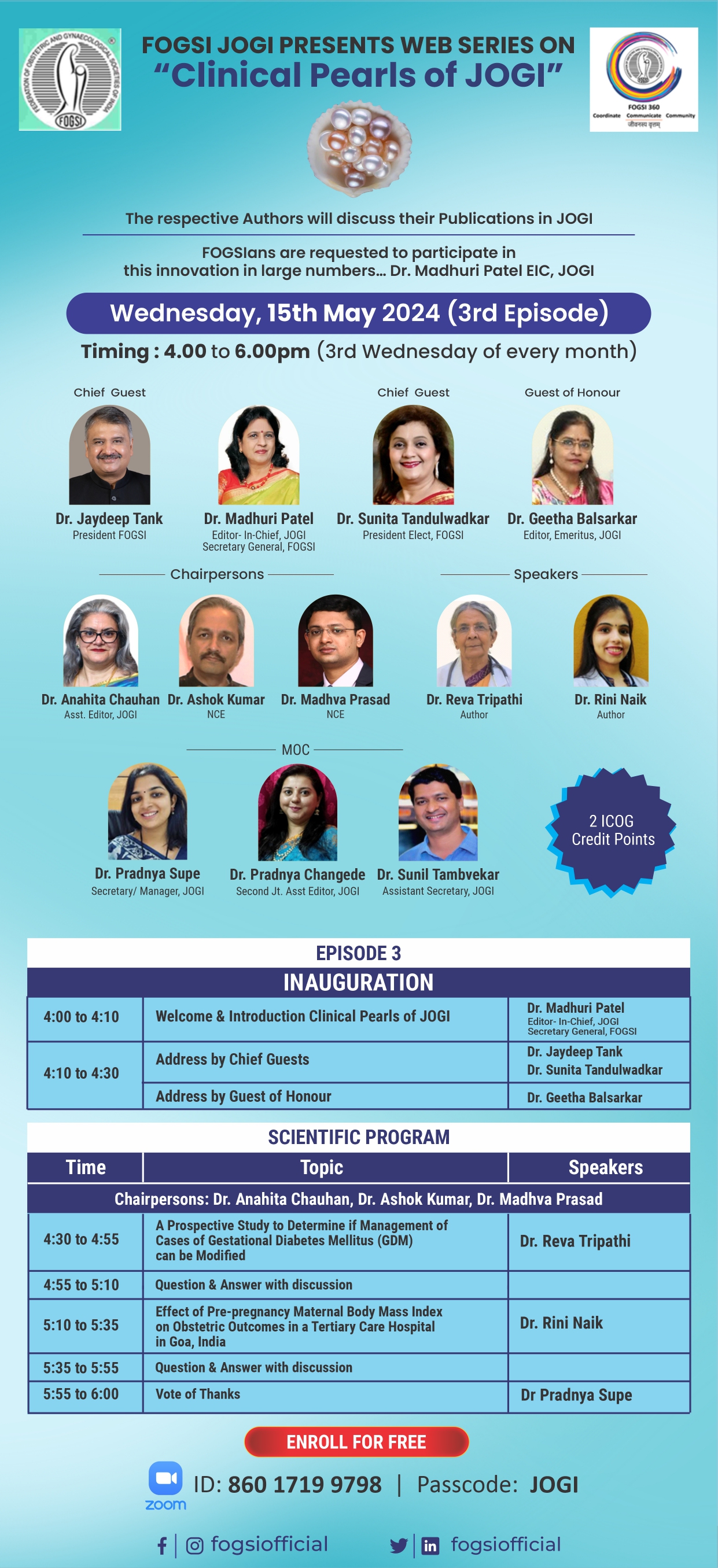
Maternal Body Mass Index (BMI) is a vital predictor of the nutritional status of any pregnant woman. Several developing countries like India are facing double burden of both obesity and malnutrition due the extreme socioeconomic distribution of our population. Thus, this study was undertaken to study the effect of pre-pregnancy maternal BMI on the obstetric outcomes. Materials and methods A retrospective observational study was conducted during the time period of 1 year (December 2018- December 2019), wherein we analysed 3940 women who delivered in Goa Medical College. Depending on the maternal BMI calculated at the first antenatal visit, all the study participants were divided into 5 BMI groups and their obstetric outcomes were studied.
Results
Majority of the study participants were in the normal BMI category (49.8%), however a large number of women were overweight (37.3%), 3.2% were obese and 0.1% were morbidly obese and 9.6%were underweight. Antenatal complications like anaemia and IUGR were more common in underweight women whereas preeclampsia, GDM, macrosomia, antepartum haemorrhage, preterm labour were more common in obese women. Increased rate of caesarean sections and postpartum complications like PPH, wound sepsis and puerperal sepsis was observed in overweight and obese women.
Conclusion
Thus adverse obstetric outcomes were observed in extremes of maternal BMI. Hence there is a need to provide pre-conception counselling to all women in the reproductive age group so that they can achieve normal BMI prior to conception and thus reduce maternal morbidity and mortality rates in our country.
Maternal BMI · Obesity · Malnutrition · Obstetric outcomesBackground
To study maternal–fetal outcomes in patients of GDM diagnosed by International Association of Diabetes and Pregnancy Study Groups (IADPSG) criteria but subsequently using a twenty-four-hour seven-value sugar profile to evaluate patients before instituting management. Methods This prospective observational study was conducted at a tertiary hospital in New Delhi, India, over a period of one year. During this period, women diagnosed as GDM between 24 and 28 weeks of gestation using IADPSG criteria underwent seven-value sugar profile in twenty-four hours before initiating any therapy. Those with normal profile were kept on observation only, whereas others were managed by Medical Nutrition Therapy (MNT) with or without pharmacotherapy as required to maintain euglycemia. Maternal and fetal outcomes were documented and analysed to detect differences between the groups.
Results
Out of 2279 pregnant women, 201 (8.8%) were diagnosed as GDM. The twenty-four-hour seven-value sugar profile was normal in 78 (38.8%) patients, who were managed only by close observation. Treatment was given to other patients; 93 (46.2%) patients were managed with MNT only, whereas pharmacotherapy by way of metformin was added to 22 (10.9%) patients and 8 (3.9%) patients required insulin. Differences in maternal–fetal outcomes between the treated and untreated groups were not found to be statistically significant.
Conclusions
The policy of evaluating patients with twenty-four-hour seven-value sugar profile after an abnormal Oral Glucose Tolerance Test eliminated over one-third women from receiving treatment and interventions for GDM without compromising maternal–fetal outcomes.
GDM · Twenty-four-hour seven-value sugar profile · IADPSG · Maternal–fetal outcomesBackground
No previous study compared ACOG and DIPSI criteria for diagnosing gestational diabetes (GDM). This study compared diagnostic accuracy of Diabetes in pregnancy study group of India (DIPSI) with Carpenter–Coustan (CC) and National Diabetes Data Group (NDDG) criteria for diagnosis of GDM and correlation with fetomaternal outcome.
Methods
A total of 1029 pregnant women underwent 2 h 75 g OGTT in non-fasting state. After 3–7 days, women were called in fasting state and subjected to 100 g OGTT and fasting, 1, 2, 3 h samples were taken. GDM was diagnosed using DIPSI, CC and NDDG criteria. All women were followed till delivery, and fetomaternal outcome was noted.
Results
10.4% (107) women were diagnosed as GDM by DIPSI, 6.4% (66) by CC and 3.1% (32) by NDDG criteria. Sensitivity of DIPSI with CC was 98.48%, specificity was 95.64%, and diagnostic accuracy was 95.82%. Sensitivity of DIPSI with NDDG was 99.89%, specificity was 92.38%, and diagnostic accuracy was 95.52%. Sensitivity of NDDG with CC was 48.48%, specificity was 100%, and diagnostic accuracy was 96.7%. Women with GDM by all three criteria were seen to have a significantly higher proportion of LSCS, higher birth weight and macrosomia compared to normoglycemic women (p value<0.001).
Conclusion
Diagnostic accuracy, sensitivity and specificity of DIPSI are comparable to CC and NDDG criteria; therefore, DIPSI can be recommended for diagnosing GDM with added advantage of low cost, simplicity and convenience. Women diagnosed as GDM by DIPSI, CC and NDDG had significantly higher rate of cesarean delivery, higher birth weight and macrosomia as compared to women with normoglycemia.
DIPSI · CC · NDDG for GDMBackground
Postpartum period is associated with significant weight retention and weight gain. The aim of this study was to develop and validate a comprehensive questionnaire to assess the risk factors, facilitators, and barriers to postpartum weight management.
Methodology
The development and validation were done in five major steps by applying a mixed-method study design. Items were generated through literature review, focus group discussions, and in-depth interviews, followed by the assessment of content validity, face validity, construct validity, and reliability.
Result
The final questionnaire comprises 36 items which are split into five major domains assessing perceptions related to body weight, eating behaviour, physical activity, sleep pattern, and beliefs/myths associated with postpartum period. The questionnaire has a satisfactory construct validity through factor analysis (65.12) and good internal consistency and reliability with a Cronbach’s alpha of 0.79.
Conclusion
This is a comprehensive tool to assess the risk factors, facilitators, and barriers to postpartum weight management and will aid in developing women centric strategies to curb the problem.
Postpartum · Post-pregnancy · Weight retention · Obesity · Questionnaire · ToolBackground and Aims
The pregnancy weight is usually retained in the form of abdominal fat during the postpartum period. The willingness to lose weight is influenced by knowledge, attitude, beliefs and practices. This study aims to comprehend the awareness, beliefs and perspectives of postpartum women regarding their perceived factors, barriers and facilitators associated with post-pregnancy weight status.
Methods
Overweight and obese postpartum women aged between 20 and 40 years and had delivered an infant in the last 2 years were recruited via convenience and purposive sampling techniques. The final sample comprised 27 participants with a mean age of 29.96±4.50 years. Four focus group discussions and eight in-depth interviews carried out were audio-recorded and transcribed verbatim. Codes, sub-themes and themes were generated using Atlasti 9 software.
Results
Major themes identified were perceived factors causing postpartum weight retention/weight gain including social and cultural beliefs related to diet and exercise specifically associated with this period, perceived motivators and deterrents of weight loss including eagerness to lose weight and perceived facilitators and barriers to weight loss including intrinsic and extrinsic factors such as time, energy, evidence-based knowledge about diet and physical activity, family support and obligation to family’s advice.
Conclusion
The unique challenges and barriers associated with postpartum weight loss efforts should be taken into consideration by healthcare professionals and public health policy-makers to design strategies specific to postpartum women.
Postpartum · Weight retention · Obesity · Risk factors · Barriers · Qualitative researchRenal disease has always been a challenge for the treating obstetrician. With new advances in the management of renal disease, an increasing number of patients can continue the pregnancy and with individualization have a better outcome.
Material and Methods : To analyze the pregnancy outcomes in renal disease, a retrospective cohort observational study over 5 years at a tertiary care institute in northern India was done. All the pregnant women with pre-existing renal disease of any etiology presenting at any period of gestation who consented were included and those not consenting were excluded from the study.
Results : Of 62 patients enrolled, 82.26% (n = 51) were followed,17.74%(n = 11) were lost to follow up. 58.82% (n = 30) had to undergo termination of pregnancy and 41.18%(n = 21) had delivery after 28 weeks of gestation. The antenatal complications seen were hypertension in 15.69%, diabetes mellitus in 9.80%, anemia in 5.88%. Fetal complications included preterm delivery (42.85%) and small for gestational age babies(61.90%). Cesarean delivery was 85.71% and normal delivery in 14.29% of patients.
Conclusion : Both maternal and fetal outcomes are influenced by the cause and degree of renal dysfunction. A better outcome is seen when the renal disease is under control, good antenatal follow-up, multidisciplinary approach, and timely delivery.
Pregnancy with renal diseases · Outcome of pregnancy · Creatinine levelsIntroduction After initial studies suggested that pregnant women were not at a higher risk of complications due to COVID‐19 infection. Recent investigations from Sweden and the US have indicated that pregnant and postpartum women are at increased risk of severe complications associated with COVID‐19. This study aims to find out the prevalence of maternal mortality and the clinical course of maternal mortality cases due to COVID-19 pneumonia.
Methodology : A cross-sectional study was conducted from May 1st, 2020, to April 30th, 2021, at Postgraduate Institute and YCM Hospital Pimpri Pune (Maharashtra), a dedicated COVID hospital during COVID pandemic. During study period, all pregnant women who were diagnosed to have COVID-19 infection by RT PCR/Rapid Antigen Test were admitted and were enrolled for the study.
Aim : To audit the maternal mortality due to COVID-19 infection.
Primary : To estimate the prevalence of maternal mortality due to COVID-19 infection in obstetric patients.
Secondary : To systematically study and analyze the clinical course of infection in mothers who had mortality due to COVID-19 pneumonia. Data collected in standard format regarding Demography, clinical presentation, need for ICU/HDU, CXR findings, laboratory parameters and cases with maternal mortality were studied in detail to fulfill the study objectives.
Results : Among 871 COVID-19 cases diagnosed during pregnancy, nine patients had maternal mortality due to covid pneumonia. There was no obvious obstetric cause for mortality in these cases. The prevalence of maternal mortality was 0.01 (1.03%). Cases with maternal mortality were mostly in 3rd Trimester (5 of 9 cases) and presented with moderate to severe illness with breathlessness and myalgia in all 9 cases, cough and fever in 7 out of 9 cases, Tachypneoa was noted in all patients. Saturation below 90 in 6 cases and below 94 in 3 cases. Chest X-ray showed bilateral lung affection in all 9 cases. Leukocytosis with raised N:L ratio was predominantly seen, thrombocytopenia noted in 5 cases and elevated levels of acute phase reactants and inflammatory markers such as CRP, S. ferritin, ESR, LDH, D-dimer and S. fibrinogen was observed. None of the study participants received vaccine for COVID-19. Conclusions COVID-19 pneumonia is an additional toll for maternal mortality. Obstetric patients in 2nd and 3rd trimester having COVID-19 infection with late presentation to hospital, moderate to severe disease (RR > 30 min), with raised inflammatory markers (N:L ratio, CRP, Ferritin, d-Dimer, etc.) at presentation, having bilateral lung affection are at risk of poor maternal outcome.
Maternal mortality · COVID-19 · Viral pneumoniaObjectives : This prospective clinical trial was conducted to assess serum bile acids (BA) levels in women with intrahepatic cholestasis of pregnancy (ICP) compared to both pregnant and non-pregnant controls; and evaluate perinatal outcome in relation to bile acid levels. A scoring is proposed based on biochemical markers to optimize management in ICP cases.
Materials and Methods : Serum bile-acids(BA) were assessed in 71 intrahepatic-cholestasis of pregnancy(ICP) cases (group-I), versus 50 pregnant (group-II) and 35 non-pregnant (group-III) controls. Ursodeoxycholic acid (UDCA) was administered in ICP group. Baseline bilirubin (SB), aminotransferases (AT), alkaline-phosphatase were sent in groups I & II. Investigations were repeated in group-I after 4 weeks. Perinatal complications were noted.
Results : Mean BA in group-I was 75.92 ± 39.9 µmol/L which reduced to 41.3 ± 15.4 µmol/L(45.6%, p < 0.001) with UDCA. Mean BA was 29.2 ± 5.7 and 5.9 ± 1.8 µmol/L in group-II and group-III. UDCA significantly reduced itching-score. Rate of fetal distress linearly increased with the increasing baseline levels of serum BA, AT and SB: from 2.5 to 100% at BA < 40 and ≥ 200 µmol/L, (p = 0.008); from 16.1 to 100% at AT < 100 and ≥ 500 IU/mL(p = 0.016); and from 6.8 to 100% at SB < 0.8 and > 5 mg/dL (p = 0.001); respectively. Their baseline levels were divided into 5 groups in correlation to fetal distress. Serum BA < 40, 40–80, 80–120, 120–200, ≥ 200 µmol/L; AT < 100,100–200,200–500, ≥ 500 IU/mL; and SB < 0.8, 0.8–1.0, 1.1–2, 2.1–5 and > 5 mg/dL. Nutan ICP scoring was proposed with a score 0 to 4 given to each parameter and score-based management protocol was suggested for fetal surveillance and delivery.
Conclusions : SBA are higher in Asian Indian pregnant women. Levels > 30 µmol/L can be taken as a cut off for diagnosing ICP in Asian-Indian women. Adopting higher cut-offs for this geographic part will avoid over-diagnosing ICP and iatrogenic early termination of pregnancy. Suggested scoring will help clinicians in optimizing the time of delivery on an individualized basis.
Intrahepatic cholestasis of pregnancy · Serum bile acid · Ursodeoxycholic acid · Scoring for ICPIntroduction : Stillbirth is a global health problem having many emotional, social and economic consequences. India has the largest number of stillbirths per year in the world. Objective The objective of this study is to review the causes of stillbirth and classify the causes into maternal, foetal and placental causes and further classify causes by relevant condition at death (ReCoDe) classification. We intend to observe the causes of and demographic factors contributing to the burden of stillbirths. Using this data, the areas of action can be identified and measures can be formulated to reduce a significant number of perinatal mortalities.
Methodology : This is an observational study of data collected over one year (January 2019–December 2019) from a tertiary care centre in Mumbai, India. The maternal demographic characteristics and causes of stillbirth were studied. The causes of stillbirths were classified into maternal, foetal and placental causes and relevant condition at death (ReCoDe) classification [1].
Results : A total of 9074 babies were delivered during this period. There were 275 stillbirths in this year (SBR 30.3 per 1000 total births). Majority of the mothers were in the age group of 26–30 years (32.7%). Almost all the mothers (98.5%) were from urban areas. As per the modified Kuppuswamy classification for urban India, 195 (71.79%) belonged to the upper lower class. 31.2% were primigravidae, and 54.8% had 3 or more antenatal visits. Maternal conditions (pre-eclampsia, diabetes, pre-existing medical disorders) as a group were the cause of maximum number (42%) of stillbirths either directly or as a contributory risk factor. 78% of the stillbirths occurred in the antepartum period. Ours being a referral centre, 65% subjects in the study were referred to us from other peripheral hospitals. 53.8% of the stillborn babies were male. 58.9% were macerated stillbirths. According to the ReCoDe classification, hypertensive disease in pregnancy was the most common cause of stillbirths (76) followed by foetal growth restriction (30).
Conclusion : Most of the stillbirths in this study were due to maternal medical conditions. Out of these conditions, hypertensive disorders of pregnancy and its consequences were the most common (66.08%). Better regulation of the private healthcare sector, provision of healthcare providers and better equipments in peripheral health centres and a well-chalked out referral system will contribute to reduction in the number of preventable stillbirths. Regular facility-based stillbirth review meetings and healthcare provider accountability would also help to reduce the burden of this silent epidemic as well as reach the goal of a “single-digit” stillbirth rate by the year 2030.
Stillbirth · Classification of stillbirth · ReCoDe classification